The Past, Without the Future
- Cultura
- Diseño
- Perfumería
- Ideas
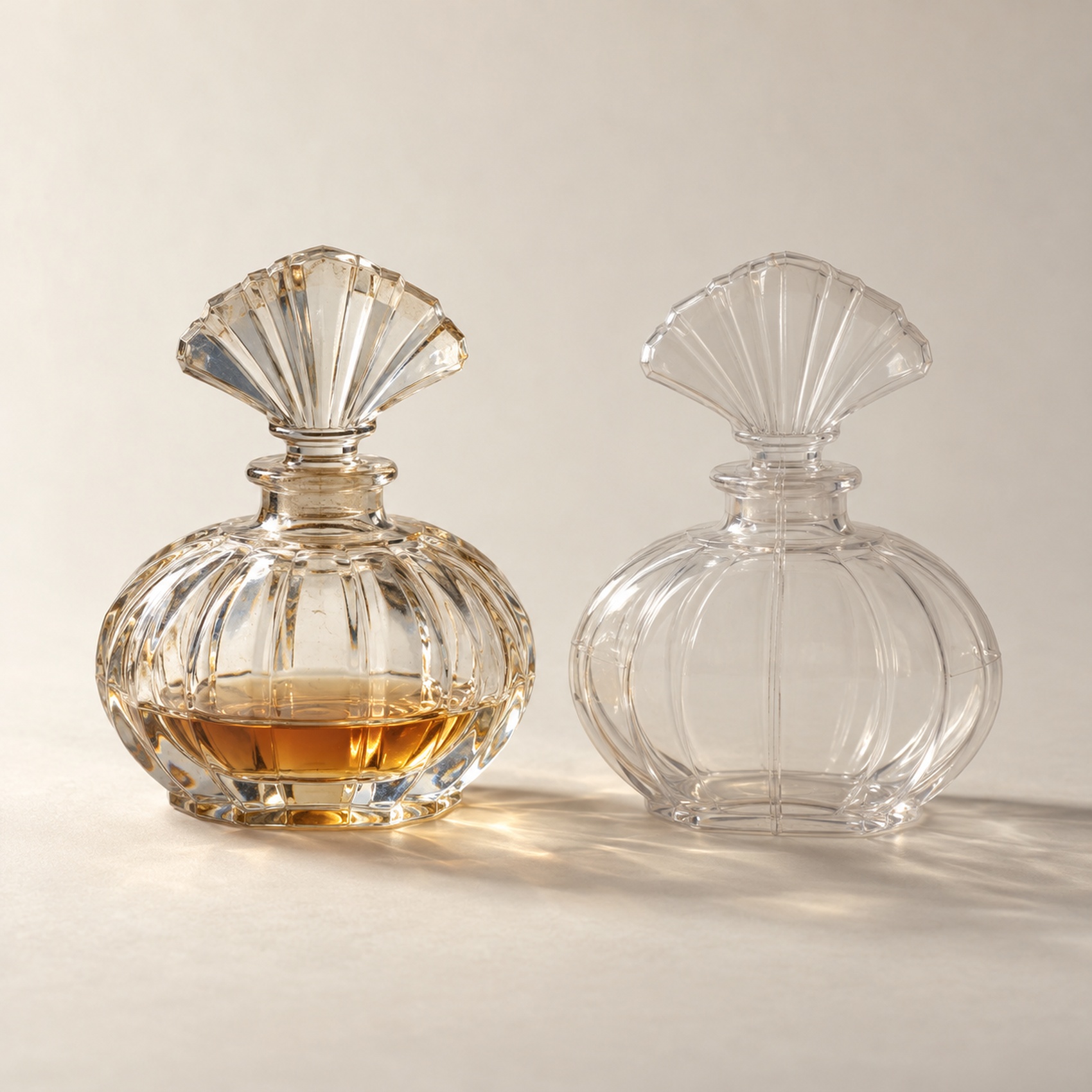
I have been enjoying a lot of what fashion is bringing back, which makes my growing discomfort with it somewhat inconvenient.
Dior is restoring thirteen fragrances from its historical catalogue. On the runway, designers are revisiting archival silhouettes, reviving accessories, and explicitly identifying collections from decades ago as their references. Jonathan Anderson’s Dior keeps returning to the house’s early designs; Marc Jacobs went as far as supplying credits for his historical influences. Meanwhile, the ’90s, the early 2000s, and now the 2010s seem to coexist as equally available places to shop for an aesthetic.
Fashion has always done this. But the accumulation feels significant, particularly when it extends from the clothes to the perfume, the accessories, the campaigns, and the entire atmosphere surrounding them. The impression has raised eyebrows even among the tastemakers themselves: Vogue published an article in May titled “How Much Nostalgia Is Too Much Nostalgia?”.
I am less bothered by how much of the past is returning than by how little seems interested in taking it somewhere.
The past as a palette
There is something I find rather appealing about shedding the fear of looking old. Almost reminiscent of moving past ageism: a shape, a material, or an entire visual language need not become embarrassing merely because we can identify when it was fashionable.
Historical distance can even make things easier to appreciate. Once the immediate associations have loosened, something that used to belong to a particular generation or social group becomes available in other ways. We can notice its proportions, its extravagance, its peculiar beauty, without having to subscribe to the entire world that produced it.
The past becomes a creative palette. Different periods offer colors, textures, inclinations, and ways of imagining a person. I love having all of that available.
It is also part of why retrofuturism has always appealed to me. The cars in Gattaca, for example, make its future feel materially connected to the world we already inhabit. I would hardly want to live under that society’s genetic hierarchy, but I find its visual continuity compelling. The future has not required every attractive object to be discarded and replaced with something unrecognizable.
Even Futurama, in its own ridiculous way, allows that continuity. And there are interiors and clothes in Star Trek: The Next Generation that now feel both futuristic and comfortably vintage. These worlds can preserve familiar pleasures while imagining other ways to live around them.
I find that more tangible than a future designed entirely around demonstrating its distance from the present. Some things would survive. Some would improve. Others would become obsolete, or remain in use for reasons beyond efficiency. That feels closer to how people actually inhabit the world.
What I miss in much of the current nostalgia is the other half of that exercise. We have the retro part in abundance. I am less sure where the futurism went.
A future to look forward to
This is a strange moment to feel that absence. We are surrounded by declarations that the future is arriving faster than ever.
AI will transform work, creativity, research, and supposedly almost everything else. The promises are enormous. Yet the transformation being presented to us often feels more like something we will have to accommodate than something we are being invited to desire. Learn these tools. Reconsider your profession. Produce more. Adapt quickly enough to remain useful.
There are extraordinary possibilities in the technology. I use it, and I am interested in what it can make possible. But enthusiasm for particular capabilities does not require enthusiasm for the social arrangement being built around them.
Nor is the disillusionment merely an impression gathered from a few angry posts. Gallup’s survey of young Americans this year found declining excitement and hopefulness about AI, alongside growing anger. Even daily users had become less positive. Adoption and affection are evidently quite capable of moving in different directions.
Against that background, the appeal of objects with a history seems understandable. They have already belonged to a world. We can see what people did with them, what they meant, whom they dressed, and what kind of life they accompanied. The future currently being advertised offers considerably less reassurance about its place for us.
I do see a connection between that unease and the appetite for familiar eras. Economic insecurity, political exhaustion, and the prospect of yet another transformation imposed at considerable speed make the past an attractive place to look. We know its disappointments, but we also know that something beautiful happened there.
That does not mean every designer reaching into an archive is despairing about tomorrow. A house has commercial reasons to revive something recognizable; a new creative director has reasons to establish a relationship with its history. But those decisions occur within a culture, and the willingness to make them, buy them, and find comfort in them belongs to that culture too.
What concerns me is the possibility that we are becoming very good at imagining change without becoming much better at imagining a life we would enjoy after it.
I do not need clothes to look like spacesuits. Chrome, translucent plastic, and a technological reference do not automatically make a collection forward-looking. But I do want some sense of curiosity about how we might live, look, and feel beyond the available historical options. The absence I notice is an atmosphere, not a missing category of fabric.
When the reference loses its substance
There is another problem with revisiting the past: sometimes what returns is a less ambitious version of what made the original appealing.
A silhouette can remain recognizable after its construction has been simplified, its material substituted, and its proportions moderated into something easier to sell. At some point, the reference is doing more work than the object itself.
This is a feeling I have often had with cosplay. I love anime, fantasy, and costume design, but the translation into an ordinary setting can be uncomfortable to look at. Armor that seemed convincing within a film suddenly looks like plastic. The original prop may also have been plastic, but lighting, movement, sound, and post-production made it convincing within that world. Outside those conditions, the object has to sustain an effect it cannot quite deliver.
The problem is not that someone made something for fun, or that every costume should be forged in metal. It is the gap between the allure being invoked and the thing in front of me.
An archival reference can produce a similar disappointment. The shape recalls something sculptural and imposing, but the fabric does not hold it. The draping has lost its drama. The proportions suggest the original without committing to them. A piece that once had a certain severity becomes a more convenient approximation.
I enjoy comfort. I also enjoy clothes whose ambition extends beyond accommodating the wearer with the least possible friction. There is pleasure in construction that gives the body an unfamiliar shape, asks for a particular posture, or makes a person look almost sculptural. If that was part of the original’s appeal, softening it away is a consequential change.
New materials and methods can improve an old design, of course. But the historical reference should not exempt the new object from scrutiny. Recognizing what something resembles is not the same as finding it good.
You cannot reproduce the moment
Even a perfect recreation would leave something unresolved for me.
A dress associated with Marilyn Monroe or Audrey Hepburn carries more than its cut and fabric. Part of its allure belongs to the person, the occasion, the photographs, and the world in which it appeared. Reproducing the dress cannot reproduce that encounter.
I feel this quite strongly about the metal Dior Saddle bag from the Sorayama collaboration. I love it. Its strange, sculptural futurism belongs to a particular collection and moment, and owning one would feel partly like owning memorabilia of that moment.
If Dior put the same design into permanent production tomorrow, I would be less interested.
That does not mean the original would lose its history, or that its aesthetic qualities would suddenly disappear. But my relationship to the design would change. Something I associated with a particular creative event would become part of the continuously available catalogue.
I do not experience that primarily as a question of exclusivity. An object can be extraordinarily expensive and exclusive without interesting me at all. What attracts me here is its attachment to something that happened. Availability matters because it changes that association, not simply because fewer people can have it.
Perfume makes this more complicated. Some historical formulations have changed beyond recognition; others have disappeared. Materials become unavailable or restricted, production changes, and a fragrance can retain its name while gradually becoming something else.
There are perfumes I may never get to smell. That is frustrating, but there is also a certain beauty in knowing that they belonged to a moment I cannot fully retrieve. If I ever encountered a well-preserved bottle, the experience would carry anticipation that a newly available product would not.
Restoration has a legitimate place here. Perfume cannot be preserved and displayed as straightforwardly as a dress. Reconstructing a composition may be one of the few ways to give people access to it, and doing that well can require substantial research and creativity. I would probably be delighted to smell the results.
Still, I do not think access exhausts the question. An artistic or romantic attachment does not always behave like a practical problem waiting to be solved. Something can become more available and, for me, lose a little of its allure.
I may want the bottle anyway. That is part of what makes this interesting.
Something of our own
When I design clothes or work on perfume ideas privately, I am often uncomfortable with how much something resembles a work I already love. The reference may be beautiful. I may have good reasons for using it. But if the result remains too close, I start wondering what I am contributing, and even what I am enjoying about the exercise.
I want to make something that could belong to its own moment.
That does not require inventing without influences, which would be an absurd ambition. Nor does everything need to be unprecedented. Some things deserve to remain in production simply because they are good, and I would be quite happy for more beautiful, well-made objects to survive changes in fashion.
But keeping something available, restoring it, reinterpreting it, and creating something new are different ambitions. I can appreciate all of them without finding them interchangeable.
My affection for the past makes me want to see it used with more imagination. The richness is already there: forms, materials, techniques, entire ways of presenting a person. It seems a shame to have such an expansive palette and use so much of it to make familiar things slightly more available, more convenient, or easier to recognize.
I would like to feel some of that same attachment forming around something happening now. To encounter a collection, an object, or a fragrance that makes me curious about the world it might belong to; something I could look back on years later and remember wanting a future, rather than merely wanting something from the past.