Filing for Love and the Case Against Formula
- Film
- Culture
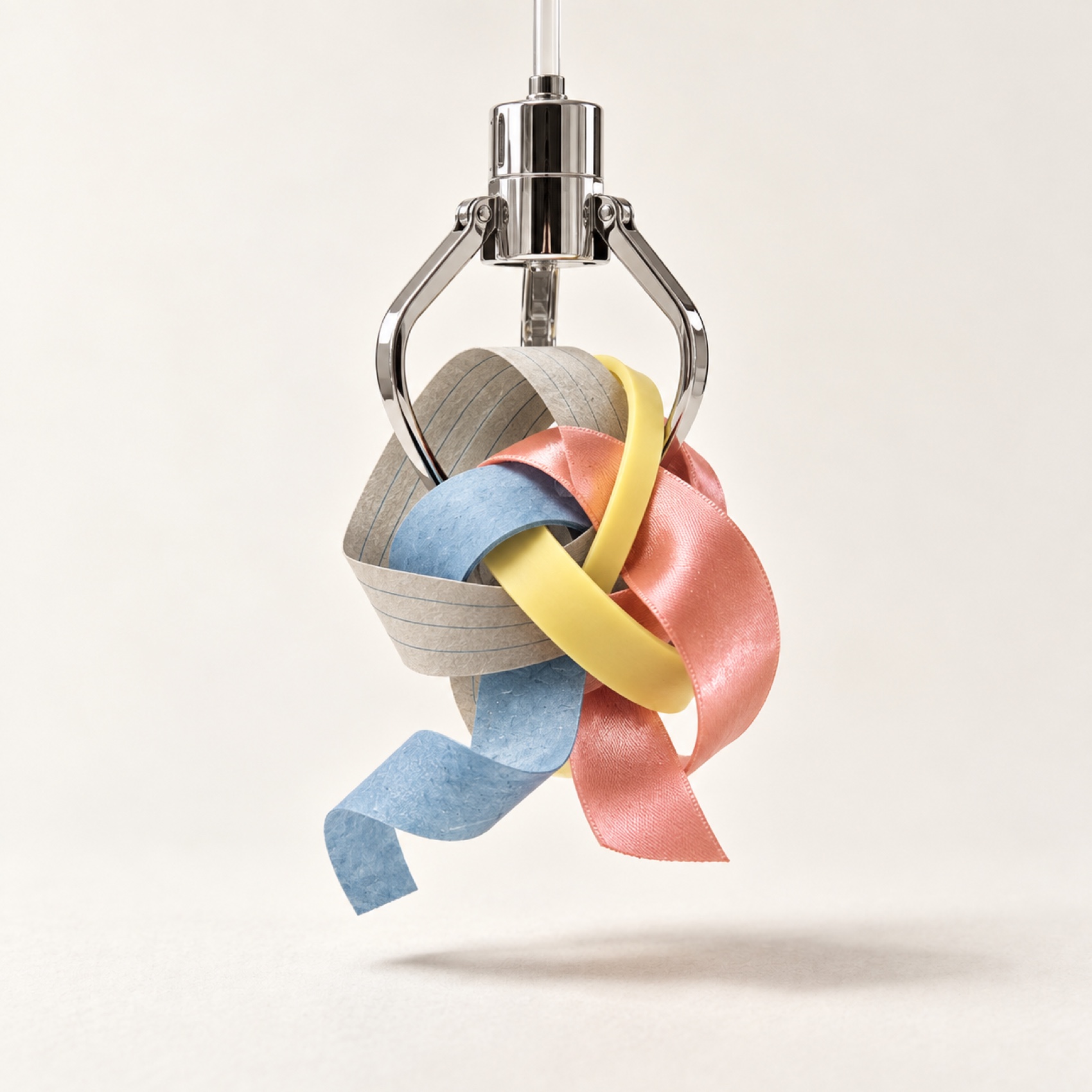
K-dramas run on a handful of recognizable templates. One is the idol look: small face, soft features, hair with architectural volume, outfits engineered for the kind of still that goes viral. Another leans muscular and brooding. Another is cute and small-scale: the textures of daily life, plain clothes, domestic scenes.
The templates look nothing like each other. What they share is a ceiling on ambiguity: characters sit squarely in their moral slots, the emotional beats resolve on schedule, and the show stays in its lane the whole way through.
Filing for Love doesn't do that. It moves.
Four registers, no dominant one
Corporate gloss and office clothes when it wants them. Genuine dumb comedy when it wants that. The procedural pleasure of the audit team pulling a report, digging into it, and landing a result. And then, without announcing a gear change, scenes with real emotional weight in them.
The show moves between these registers without ever feeling like it changed by accident. Most shows pick a register and stay in it.
The casting
Gong Myung as male lead Noh Ki-jun is an unconventional choice, enough so that some of the discussion I encountered was people arguing that Kim Jae-wook, cast as the secondary lead, should have had the top role. Jae-wook is the bigger name, the more expected casting. Gong Myung is manly and adult in how he moves, cute through expression and behavior rather than manufactured softness. He reads as a real person more than a template.
Shin Hye-sun, coming off a Netflix thriller where she played several shifting identities and gave a particularly acclaimed performance, is precise enough that the emotional scenes carry more weight than the format usually allows. She plays emotional unavailability as armour and makes it magnetic: guarded, formidable, softness rationed. He plays the wanting and the not knowing: someone who knows what he feels before he has any idea what to do with it. The asymmetry between them works.
Where the heir went
In most K-dramas, the chaebol heir or company executive is the male lead: rich, magnetic, the hinge the whole rescue plot swings on. Here, that figure is the secondary lead: Kim Jae-wook's vice chairman, slightly antisocial, not particularly charismatic, emotionally troubled in ways the show doesn't clean up.
The leads invert the usual hierarchy in a different direction. Shin Hye-sun's In-ah outranks Ki-jun — she is the executive, he the demoted subordinate — and she's usually the one steadying things. And Ki-jun keeps reaching for her at moments when she's given him nothing to hold onto. The inversion is not clean. Neither of them saves the other, not cleanly. The acting and direction carry it without an explanation from the script.
Both the styling and the supporting cast follow suit. Nobody looks mid-photoshoot. The secondary leads carry themselves like people rather than types. One supporting character (one of the audit team members) is likeable and genuinely incompetent, and the show simply leaves that there, without redemption or punishment. It's a small thing.
The claw machine
The script's clearest moment comes at a claw machine. In-ah tells Ki-jun he's misreading what he feels: he learned too much about her at once, she says — saw her at her most exposed, found out her family situation — and mistook what that stirred up for something else.
It's curiosity, pity, that kind of thing. You learned way too much about me at once. You saw me naked, learned my family stuff. After seeing all that, you started thinking I'm lonelier and sadder than I let on. That's what happened.
Ki-jun won't have it:
Don't put labels on what I feel. Curiosity, pity, whatever. Liking someone is liking someone, isn't it? Feelings don't come labelled one and two. Wanting to hold you, wanting to see you, feeling sorry, worried, curious, even jealous...
Neither of them is wrong. The scene doesn't resolve it. Scenes like this appear throughout the drama without announcing their importance.
Filing for Love is not The Art of Sarah. It isn't trying to be and has no reason to. It's a workplace comedy that never fully commits to being only a workplace comedy, and trusts its leads with scenes less resolved and more adult than the format asks for. None of that makes it a great drama. It makes it a more interesting one than it looks.