The Mystery Molecule; or, How I Ended Up Suspecting Cypriol
- Perfumery
- Research
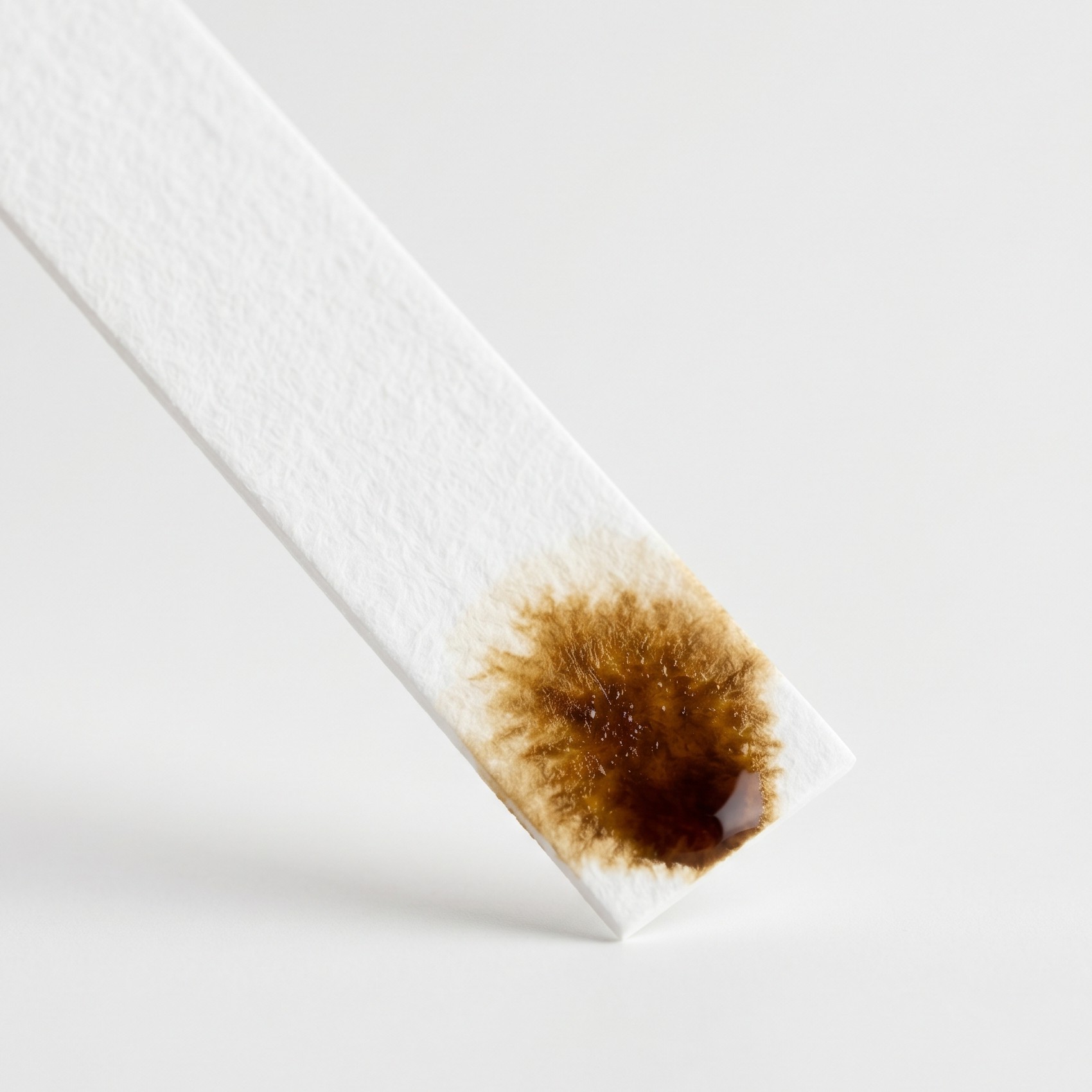
It starts as an itch you can't locate.
You smell something and you recognize it, not the fragrance, but something in the fragrance. A particular quality. A texture of depth that you've encountered before, in a different bottle, with different listed notes. You check the pyramids. Nothing overlaps. You dismiss it as over-interpretation, nose fatigue, the brain pattern-matching where there's nothing to match. And then you smell something else, from a different house, a different perfumer, and it's there again.
I first noticed it across a specific subset of Byredo. Not the whole catalog: Byredo is stylistically wide, and most of it doesn't share this quality. I'm talking about Oud Immortel, Eyes Closed, Reine de Nuit, and to some extent Bal d'Afrique — though Bal d'Afrique pulls it in a different direction, brighter and drier, more like a grand bazaar than a private room. The others go darker. Lush, resinous, with a spiced underbelly that reads simultaneously warm and old. Not old as in dated. Old as in depth that has accumulated over time, the olfactory equivalent of a place where many things have happened. A museum at closing time. An old library in summer. A dark, spiced, living thing.
What made this an actual puzzle rather than just a vague impression was that the three fragrances I kept coming back to have very different listed notes. Oud Immortel explicitly names oud alongside patchouli, papyrus, cardamom, incense. Eyes Closed lists no oud: cinnamon, cardamom, carrot, orris, ginger, then patchouli and papyrus at the base. Reine de Nuit is a rose and incense chypre over patchouli and ambrette. Three different olfactory briefs, three different characters on paper, but something underneath all of them that I couldn't explain from the pyramids. The shared quality wasn't a note. It was a structural character, a particular kind of darkness that wasn't coming from any ingredient I could point to.
For a while I left it alone.
A second sighting outside Byredo
Then I smelled Fantasque — Pierre-Constantin Guéros for Givenchy's La Collection Particulière, launched in 2024. Myrrh, incense, Malaysian oud. Completely different house, completely different perfumer, explicitly oriental brief. And immediately: the same character. Not a similarity in mood or direction, but the same specific textural thing I'd been trying to isolate in the Byredo selection.
That changed the problem. Whatever I was smelling was not confined to Byredo’s house style. I began to suspect a shared material — something specific enough to appear across different houses and different perfumers, recognizable enough to cut through completely different compositions.
The obvious hypothesis was that it was oud. Oud Immortel has it listed. Fantasque has it listed. But Eyes Closed lists no oud, and it has the same character. The timing also made me curious. I could recognize the character from the opening, on paper, before the fragrance had spent much time on skin. I had associated this kind of depth with the slower arrival of oud, but here it was immediately available. That did not eliminate oud or an oud accord; it made me want to look beyond the note’s name.
Following the perfumers
The perfumer thread turned out to be real. Looking at the Byredo fragrances I was pointing to, they're all Jérôme Epinette — the perfumer who built the majority of the Byredo catalog and who's described consistently as someone who works with exceptional-quality naturals, reaching for unusual ingredients over synthetic scaffolding. The darker register I was following repeatedly led me back to Epinette. One perfumer's signature, expressed across different briefs.
And Guéros? His career includes working in Dubai for Symrise in a context where Middle Eastern fragrance vocabulary — oud, myrrh, incense, resins — isn't exotic but everyday. He has deep familiarity with unusual naturals, the kind of familiarity that comes from working in a market where those materials are used at doses and in ways that Western mainstream perfumery rarely attempts.
Two perfumers, both with a specific kind of expertise. Both producing the same character in very different contexts. The more this narrowed down, the more interested I became in the particular materials behind that character.
A botanical near-twin
The botanical clue came from looking at the ingredient pyramids more carefully. Eyes Closed lists "papyrus" as a base note. Oud Immortel lists "papyrus" in the heart alongside the oud. In both cases, the papyrus doesn't behave like a green, reedy extract. It behaves like something deep and earthy, something that anchors the composition rather than adding a fresh or vegetal dimension. That's not how papyrus normally reads.
Cypriol (also known as nagarmotha, botanically Cyperus scariosus) is in the same genus as Cyperus papyrus. They're closely related plants; both grow in marshy riverbeds, both produce rhizomes that can be distilled. But their aromatic profiles are dramatically different. Papyrus extract tends toward the green and reedy. Cypriol is one of the most unusual-smelling materials in perfumery: woody, earthy, and spicy all at once, with a dark character that sits somewhere between patchouli, pine tar, and myrrh. It has a faintly animalic-musty dimension that makes it feel unusually close to the resinous and animalic materials around it. It can also be recognizable from the opening. On paper. In the first seconds.
When Byredo lists "papyrus" as a base note in Eyes Closed, I suspect what's actually in the formula is cypriol, or something very close to it in the same botanical family. Named by character rather than by precise source. The earthy-dark quality is cypriol's quality, not papyrus's.
Noctambule, the comparison
At this point I had a strong hypothesis and another comparison to make. Then I found Noctambule.
Noctambule is also in Givenchy's La Collection Particulière. It launched in 2022, two years before Fantasque. Its brief is rose-oud: Centifolia rose from Grasse, a papyrus accord in the heart, Malaysian oud as the base. The nose is Ane Ayo, affiliated with DSM-Firmenich.
Structurally, the comparison looks like this. We now have two fragrances in the same collection, from the same house, in the same prestige tier, both listing Malaysian oud. Noctambule also names papyrus. Fantasque is Guéros, Symrise. Noctambule is Ane Ayo, DSM-Firmenich. On paper, I had reasons to expect some of the same territory.
And the character I've been tracking is present in Fantasque and absent in Noctambule.
That was a useful comparison. Same house, same prestige tier, another composition with Malaysian oud, and yet the character I was following was absent. The name of the oud could not explain the difference on its own. It might be the material’s source or dosage, its surroundings, or another ingredient entirely. The comparison pushed me back toward the particular woody-spiced texture I kept recognizing, rather than toward “oud” as a sufficient answer.
Cypriol was becoming my strongest suspect.
The dual character of cypriol
The dual character cypriol produces is worth dwelling on, because it's what makes it such a distinctive material and such a difficult one to identify without knowing it's there. Depending on what surrounds it, it can read as dry and ancient — the museum-at-closing-time quality, papyrus-like, dusty in a specific non-pejorative sense, the smell of accumulated time — or it can go dark and lush, resinous and slightly animalic, alive. The difference between those two modes isn't the material itself but the context. Put cypriol in a composition with bright African marigold and citrus and it goes one way. Surround it with incense, myrrh, and cinnamon-cardamom spice and it goes the other.
This explains why Bal d'Afrique feels related but different from Oud Immortel and Reine de Nuit. If cypriol is present in all of them, and it may well be, given that Epinette seems to use it as a personal signature, it's being pulled in different directions by the surrounding composition. The material is the same. The room it's in changes its character completely.
One more piece of evidence that I didn't expect to find. Frederic Malle's Promise, created by Dominique Ropion, explicitly uses nagarmotha in its base alongside patchouli and labdanum. Ropion uses it. It also explains a quality I've noticed in Ropion's dark florals: that specific depth that distinguishes Intense and Absolu from lighter white floral compositions, something that goes beyond patchouli and vetiver. I'm not claiming cypriol is the source of that quality in his L'Interdit work specifically; the formulas are more complex and other dark materials are doing heavy lifting. But it suggests that cypriol is a material that serious perfumers with a natural-ingredient philosophy keep returning to. Ropion, Epinette, Guéros. Three of the most architecturally sophisticated noses working today, and the possibility of a shared interest in that unusual root oil made the resemblance more interesting to me.
A hypothesis you can verify
I can't prove any of this without the formulas. The perfume industry isn't in the habit of publishing its ingredient lists at that level of granularity, and "parfum" on a regulatory disclosure covers everything that isn't a listed allergen. What I have is convergent sensory evidence: a character that appears and disappears with the right perfumers and disappears with the wrong ones, a material that matches the character's behavior both chemically and olfactively, and a comparison inside a single collection that made the obvious explanation less satisfying.
The mystery isn't fully closed. But the best working hypothesis, the one that fits all the data and makes a verifiable prediction (smell a documented cypriol fragrance and see if the character matches), is cypriol.
Promise gives me one documented comparison; Nishane’s Shem explicitly lists cypriol too. Those are useful places to look for the family resemblance. The more direct test would be the root oil itself, at an appropriate dilution, followed by seeing what happens to its character in different company.