The Wine-Dark Sea: How Color Words Work
- Perception
- Language
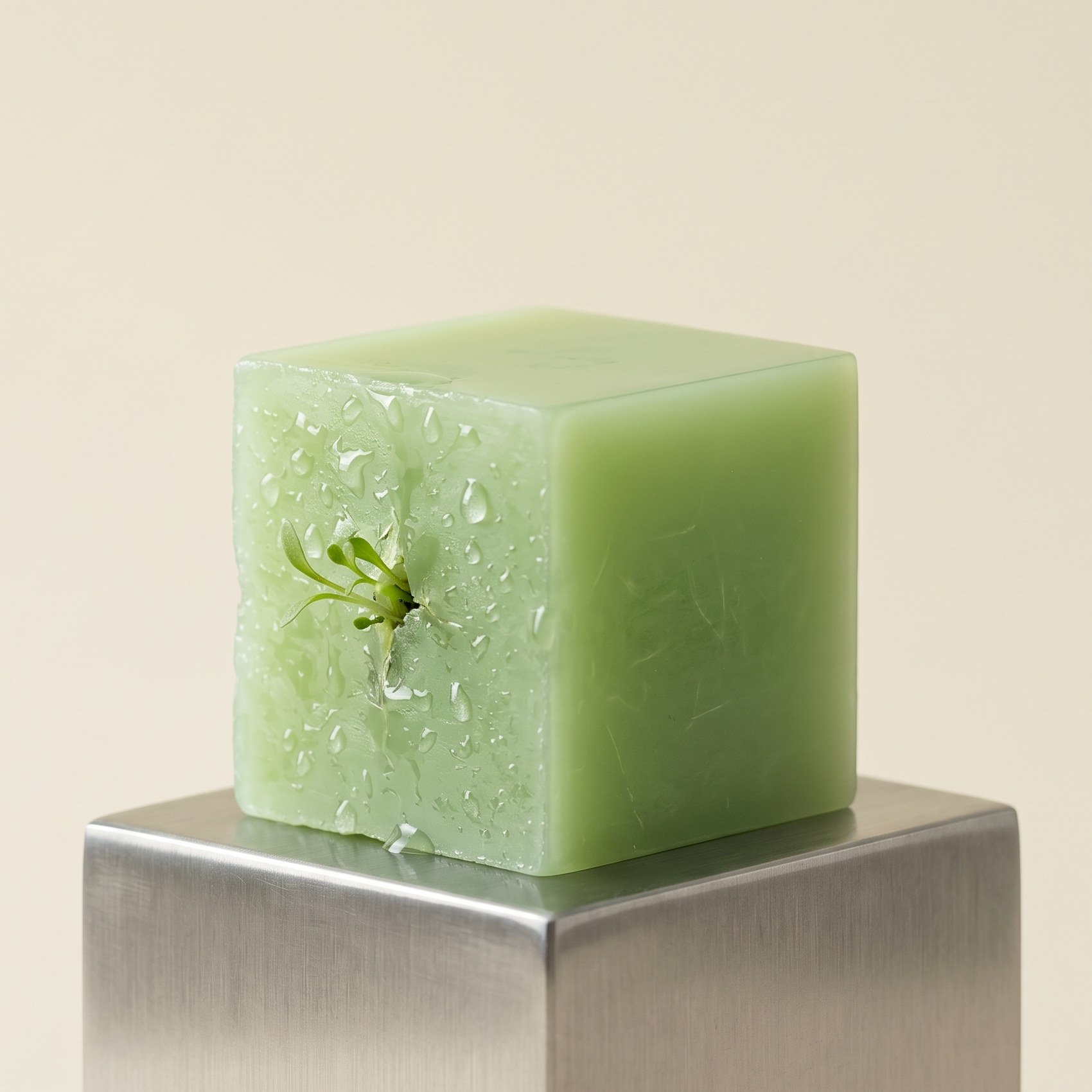
Homer calls the sea oinops (wine-faced, wine-looking) and then hands the same word to oxen. He calls fresh honey chloros, the root that later gave us chlorophyll, and gives that same word to the face of a man sick with fear. Read with a color wheel in hand, none of it parses: the sea is blue, oxen are brown, honey is gold, and a frightened man goes pale.
The descriptions are real, and they are not mistakes. They are the clearest surviving evidence that color words have not always done what ours do. Homer's vocabulary was not sorting hue into quite the categories we use. It could also describe the state a material was in: its brightness, its wetness, its freshness, its sheen, the way it caught and moved light. Hue, brightness, texture, and condition do not always separate neatly in these words.
It's a strange enough fact to attract bad explanations: that the Greeks were colorblind, or that they perceived the spirit of things instead of their colors. Neither is true, and neither is necessary. The more concrete account is more interesting, and returns to the same lesson I keep finding in smell: a word can name a category or a material-state while looking, for all the world, like it names a thing. A perfume's note pyramid lists "amber," and amber is no single molecule: it's a warm, resinous direction that every house mixes differently. Homer's "green" is no wavelength. It is freshness and sap.
What Homer's words tracked
Chloros reaches across what we call green, yellow, and pallor. It is associated with fresh vegetation, sap, and growing things, but Homer also applies it to honey and fear. Freshness and moisture offer one way of following those connections; the yellow-green range and the changing color of a frightened face offer another. What does not work is expecting one modern color swatch to explain every use.
Oinops (the wine-dark sea) is the line everyone quotes, and scholars still argue over exactly what it conveys. In any case, the word is not reporting that the water is the crimson of a Pinot Noir. Ancient wines varied and were commonly mixed with water; oinops seems to track a bundle of darkness, depth, and shifting surface — the sea at dusk or under weather, glossy and opaque and moving like the contents of a deep bowl. Homer is not failing to notice the sea is blue. He is naming a different property of it than its hue.
The pattern runs across the palette. Porphureos, usually translated "purple," attaches to the sea, to blood, to cloth, to a rainbow; its common thread is something like dark-and-agitated, shimmering, in motion, not a fixed violet. Leukos ("white") and melas ("black") track radiance and shadow: bright, clear, visible against murky, obscured, deep, which is why leukos survives in leukocyte, the bright cell. And the nearest Homer comes to a word for blue, kyaneos, the root of cyan, can mean dark or dark blue, rather than neatly naming our whole blue category.
So the words are not broken. They are indexed to axes a paint catalogue ignores: brightness, darkness, moisture, freshness, sheen, saturation, movement. A paint catalogue separates hue from its material. Homer’s descriptions often keep them together.
Brightness is one axis, not the whole story
It is tempting, once you notice how much work light and dark do in Homer, to swing all the way over and decide that these words only meant brightness: that "red" was really just "bright," and hue never entered into it at all. That doesn't survive contact with the words themselves. If a term simply meant "bright," it would land on bright things indiscriminately: snow, polished bronze, the noon sun. It doesn't. The warm-bright words cluster on blood, fire, ochre, dawn; the cool-dim words cluster on the sea, the sky, shadowed depth. Brightness is one dimension in the bundle, braided together with hue and material, not a secret substitute for color. That braiding is exactly why no single English word maps cleanly onto any of these terms.
The question itself has a tidy origin. In 1858 William Gladstone — the future British prime minister, and a serious reader of Homer — went through the poems counting color words and found black and white everywhere, red rarer, yellow and green thin, blue all but absent. From the absence he drew a dramatic conclusion: that the Greeks' color sense was physiologically underdeveloped, their eyes not yet fully evolved. It was a reasonable guess for 1858 and it is wrong. Color vision is built from the opsin genes in our cone cells, and those have not measurably changed in the few thousand years since Homer; a Bronze Age Greek had the same three cones, and the same discrimination, as you. Gladstone's count was sound. His explanation was off by a whole layer of the system. The scarcity of blue belongs to vocabulary, not the eye. That is the more interesting place for it, because vocabulary is where the pattern turns up.
How a language acquires its colors
Color words do not enter a language in random order. In 1969 Brent Berlin and Paul Kay compared the basic color terms of many languages and found a recurring path. A language with only two color terms splits the world into dark and light. The third term to arrive is almost always red. Green and yellow come next, in one order or the other; blue tends to follow; brown, then purple, pink, orange, and grey, later still. Languages seem to fill in the spectrum along a shared route, and blue sits consistently near its far end.
The pattern has been challenged and revised since 1969, including by Kay himself. Researchers have questioned both the definition of a basic color term and how the original samples were collected. The broad recurrence remains interesting: dark and light categories, red appearing early, finer divisions developing later. It gives us a pattern to investigate, rather than a compulsory itinerary through which every language must pass.
Purple, and the price of a snail
Purple is the case where a color and a kind of power really were fused, and the reason is not mystical, it is economic, and it is wonderfully concrete.
Tyrian purple came from sea snails. Murex were gathered and processed by the thousands for a usable quantity of dye; the work was laborious and foul-smelling, the glands extracted and left to ripen, and the yield was so small that the finished pigment cost more than its weight in precious metal. The same root, porphyra, named the snail, the dye, and the color all at once, and it is the same root as Homer's porphureos. Because the dye was ruinously expensive, only the very rich could wear it; because only the very rich could wear it, law and custom turned it into a marker of rank. Roman sumptuary rules reserved it; in Byzantium a child born to a reigning emperor was porphyrogenitus, "born in the purple." The line from a reeking vat of snails to the robe of an emperor is fully traceable: scarcity, labor, money, statute. Purple meant power because purple was almost impossibly costly, and that chain of cause is more interesting than any claim that the color simply was power. The snails are the better story.
The living example: Japanese
You don't need a dead language to watch a color vocabulary work differently from ours. Japanese still does.
For most of its history Japanese grouped blue and green under one old word, ao (青): linguists call languages that merge the two "grue." The seams still show everywhere. A green traffic light is ao-shingo, a "blue" light; a green apple is ao-ringo, a "blue" apple; fresh foliage is ao-ba, "blue" leaves. When traffic signals were introduced, the official documents called the go-light green, the public went on calling it ao, and the government eventually resolved the standoff by mandating the bluest shade of green the international standard would allow — adjusting the lamp to fit the word rather than the word to fit the lamp.
Japanese does have a dedicated word for green, midori (緑), but it arrived late and never fully pushed ao off its territory. And here the thread ties back to Homer: midori did not start as a hue. It meant new growth — buds, fresh shoots, the first green of a sprout — and the same word survives in an old term for an infant, a "new-budded" child. Two languages with no contact between them, separated by an ocean and a few thousand years, both reached for the freshness of young vegetation to carve "green" out of the spectrum. Chloros is fresh sap; midori is fresh shoots. That convergence is the quiet marvel of the whole subject.
There is one more fossil worth noting. Four old color words form a particularly important adjective group in Japanese: shiroi (white), kuroi (black), akai (red), aoi (blue/green). Kiiroi (yellow) and chairoi (brown) are adjectives too, with iro, color, built into them. Other color nouns, midori included, commonly modify a noun with no. The grammar still carries some of the vocabulary’s history. The roots usually reconstructed for those original four are light-states rather than hues (white from a sense of clear, manifest; black from dark; red from bright, the warmth of dawn; ao from something pale, faint, vague), though these are scholarly reconstructions, not settled facts, and worth holding loosely. (A popular claim that ao derives from ai, indigo, is not established; indigo was indeed the everyday dye of old Japan, ranging from pale teal to midnight with each dip of the cloth, but the cultural prominence of the dye and the etymology of the word are two different questions.) Taken together, the four point the same way the Greek evidence does: the earliest system leaning hard on brightness and clarity, with hue riding along rather than leading.
What color was, before hue
The swatch peeled away from any object is a particularly familiar way for us to think about color. We isolate hue because we live among synthetic dyes, printed inks, and backlit screens, where a color floats free of any material and can be pinned to a number. Once color is detached from a particular dye, stone, cloth, or plant, it becomes easier to treat it as an independent specification. The older vocabulary reminds us how much else a color description can carry: not what wavelength (or what Pantone or Hex color), but what state: how bright, how dark, how wet, how fresh, how glossy, how alive.
Smell teaches the same thing. "Amber" in a perfume names no molecule, only a warm-resinous direction. Homer’s chloros can carry freshness, vegetation, yellow-green color, or pallor. In both, the word is a category wearing the costume of a thing, and reading it literally is the error. The map is not always hue. Sometimes it is moisture, or radiance, or the dark churn of a sea at dusk.
The ancients were not staring at a blue sea and failing to see it. They were looking at the same sea we do and naming a different property of it: its depth, its motion, the wine-dark weight of it under a low sky. We name the wavelength because, for us, color has been pried loose from its materials and set on a wheel of its own. Their descriptions often hold the material and its appearance together. Neither is the truer way of seeing. They are two different cuts through the same light.