The Invisible Scaffold: On Single-Note Fragrances
- Perfumery
- Design
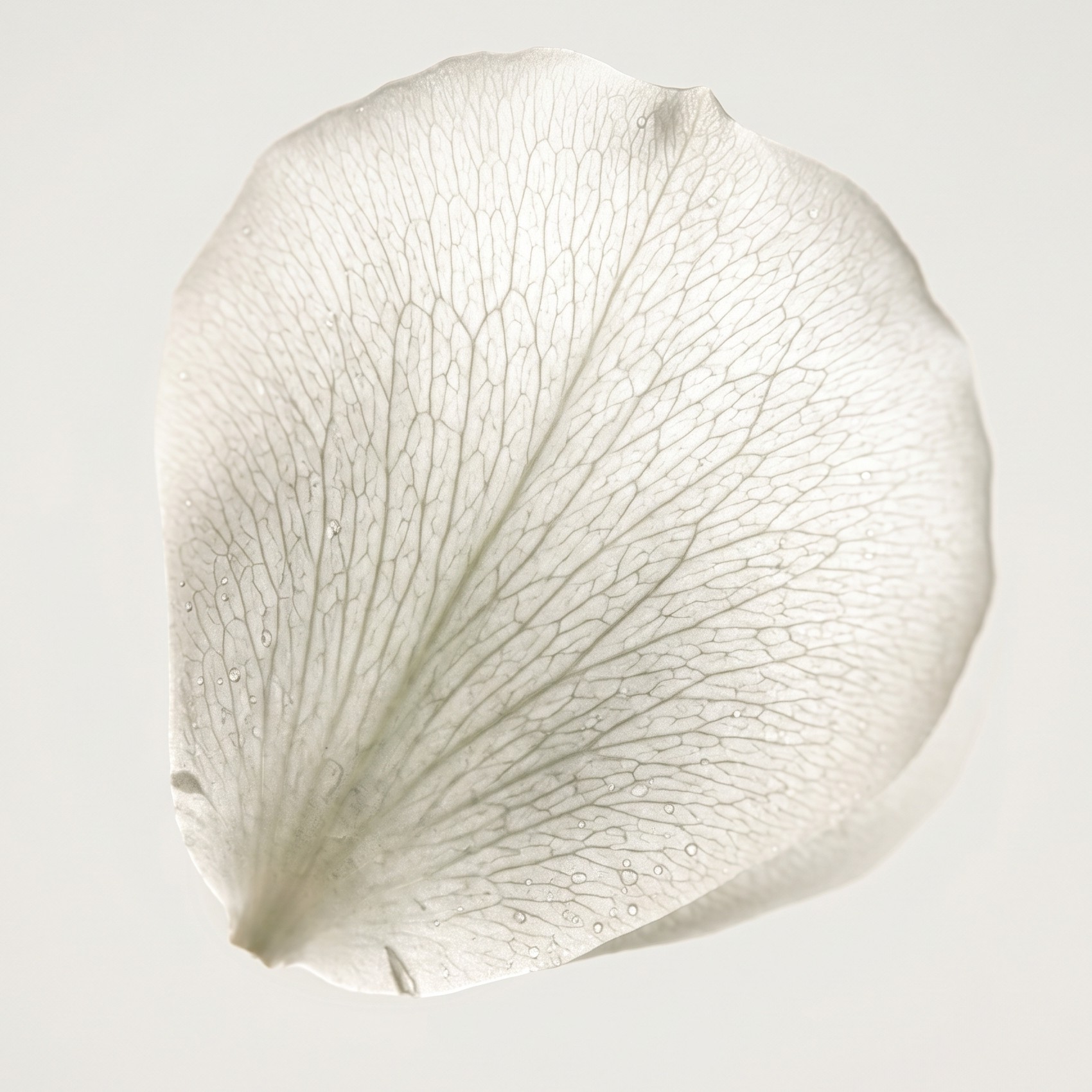
The category called "single note" is a lie, and an interesting one.
A fragrance can be built around one aromachemical. But a “single note” usually promises a recognizable subject, not a one-material formula. A straight-up rose absolute without dilution, fixative, or supporting materials smells dense and almost cloying, like pressing your face into an overripe flower — vivid but unstructured. What we experience as "a rose fragrance" is always a construction: multiple ingredients, many of them synthetic, arranged so that the rose is what you hear and everything else becomes inaudible.
The challenge of single-note perfumery isn't simplicity but its opposite. You are building a complex thing and then making the complexity invisible.
Three ways to fake the singular
There are three distinct categories operating under the same marketing label, and they solve the problem differently.
The first is fragrances built around ingredients that actually exist and can be extracted. Rose is the clearest case. Turkish rose absolute is a real material: Rosa damascena from the Isparta region, solvent-extracted, with a genuine and complex aromatic profile that you can smell in isolation before building around it. Byredo's Rose of No Man's Land belongs here. The published pyramid places Turkish rose petals at the top and rose absolute in the heart. The rose is presented across the composition rather than confined to one tier. The pink pepper doesn't introduce itself as a note you track; it gives the rose a physical texture, a slight sharp edge that keeps it from becoming syrupy. The raspberry blossom sits beside the rose in the heart without competing because it's extending one specific facet of it, the faintly fruity, almost jammy quality that Turkish rose absolute already contains. And the papyrus and amber in the base do something we've discussed elsewhere: they go earthy and slightly dark, which happens to be where a rich, high-concentration rose naturally tends. The base doesn't anchor a bright floral. It meets the rose where it's going.
You smell only rose, continuously and from different angles, while the work is being done by a precisely calibrated system of ingredients that each serve the central material's internal logic rather than their own.
Osmanthus, from Acqua di Parma’s Signatures of the Sun collection, offers another way of arranging the subject. The flower has an unusually complex character: apricot-fruity, leathery, slightly animalic. The published pyramid places it in the base, beneath green mandarin and neroli, then peony, pink pepper, and ambrette. I find that arrangement interesting because the supporting notes can approach different facets of the named flower before the whole character becomes clear. The citrus freshness, light floral quality, and vegetal muskiness give several ways into it. The pyramid suggests a direction through those relationships, rather than telling us the minute at which each material will become perceptible.
When the source can't be extracted
The second category is fragrances built around materials that don't exist as natural extracts, or exist only in poor or impractical form. Cherry blossom has no usable natural extract; sakura, as a perfume note, is entirely an accord built from synthetic components that approximate the perception of the flower. Frangipani (plumeria) is barely extractable in usable quantities; most frangipani in perfumery is synthetic construction. Magnolia extracts exist but are considered of poor quality, which is why good magnolia fragrances also rely heavily on accord work.
This category is harder to evaluate because there's no reference material to judge fidelity against. Most people who encounter sakura as a scent encounter it in a diffuse outdoor context — masses of blossoms at variable distance — which means their olfactory memory of it is already impressionistic and environmental rather than precise. The same is true of frangipani for most wearers; you experience it in a tropical context, mixed with heat and humidity and the general green-floral atmosphere of where it grows, not as a clean isolated extract.
Acqua di Parma Sakura succeeds because it builds toward the environmental impression rather than trying to isolate a flower that can't be isolated. The bergamot and mandarin create a bright, slightly sparkling opening that reads as outdoor and solar. The jasmine sambac in the heart shares the white-floral character of cherry blossom without asserting itself as jasmine specifically; at this concentration it adds to the accord rather than becoming a separate note. The musk base is minimal and clean. The whole thing points toward a specific kind of atmospheric freshness rather than a literal flower, and because the flower was atmospheric to begin with, the construction is honest. You smell what you'd smell standing under the trees.
Jo Malone Frangipani, by Marie Salamagne, does something similar but more complex. Frangipani's actual character, when you're near it, in heat, in its native context, is creamy, peachy, slightly narcotic, with an underlying tropical green quality. The solar notes in the opening don't function as a separate top note; they're recreating the luminous quality of intense equatorial light, the photographic effect of sun through white petals. The ylang-ylang in the heart shares frangipani's heady, slightly banana-cream quality and reinforces it rather than introducing a competing floral. The sandalwood and benzoin base provide the warm-creamy depth that keeps the fragrance from going flat. The fragrance maintains its subject from beginning to end because the surrounding materials amplify that sensory environment rather than pull it in competing directions.
The fragrance that pretends to be a person
The third category is the strangest, and the most revealing about what "single note" actually means.
Le Labo's Another 13, composed by Nathalie Lorson, is built around an ambroxyde-centered, musky-amber effect. Le Labo markets it as an ambroxan fragrance, which simplifies it but doesn't misrepresent it: ambroxyde is central to the published description. What surrounds this musk core is minimal: pear, a trace of jasmine, moss, ambrette. The surrounding materials leave that architecture audible while making the formula feel like skin rather than perfume.
The "single note" here isn't a botanical at all. It's a perception: this smells like a person, not like a fragrance. The central subject is the absence of a central subject: you notice the wearer, not what they're wearing. It is the logical conclusion of the category's underlying aspiration. Every single-note fragrance is trying to disappear its own construction; Another 13 takes that aspiration literally and builds a fragrance whose subject is precisely the sensation of there being no fragrance.
Invisibility as craft
What these all have in common, and what distinguishes them from single-note fragrances that fail, is that the supporting ingredients don't have independent identities in the finished composition. You can't hear the bergamot in Sakura as bergamot; you experience it as brightness. You can't pull the ylang-ylang out of Frangipani; it contributes to a character. The scaffold is invisible because every element of it serves the central material rather than the other way around.
Fragrance construction that does this poorly tends to treat the central note as a jewel to be set rather than a voice to be amplified. The "setting" — the citrus opener, the woody base, the supporting florals — has its own character that it asserts alongside the central note, producing a fragrance with multiple identities coexisting rather than one identity expressed through multiple means. You smell the rose and also the woods. You smell the osmanthus and also the patchouli. The construction becomes visible.
The paradox is that achieving invisibility of construction is technically demanding in a way that complex multi-note fragrances aren't. A dense oriental or chypre can accommodate idiosyncratic ingredients and still cohere through richness; the complexity absorbs its own inconsistencies. A single-note fragrance has no such tolerance. Everything that doesn't serve the central subject immediately becomes a distraction. There is no redundancy to hide behind.
This seems backwards. "Make a fragrance that smells like one thing" is one of perfumery's hardest briefs. Success means building an elaborate support structure, then making sure the wearer never notices it.